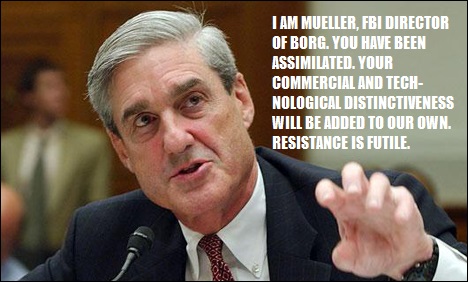
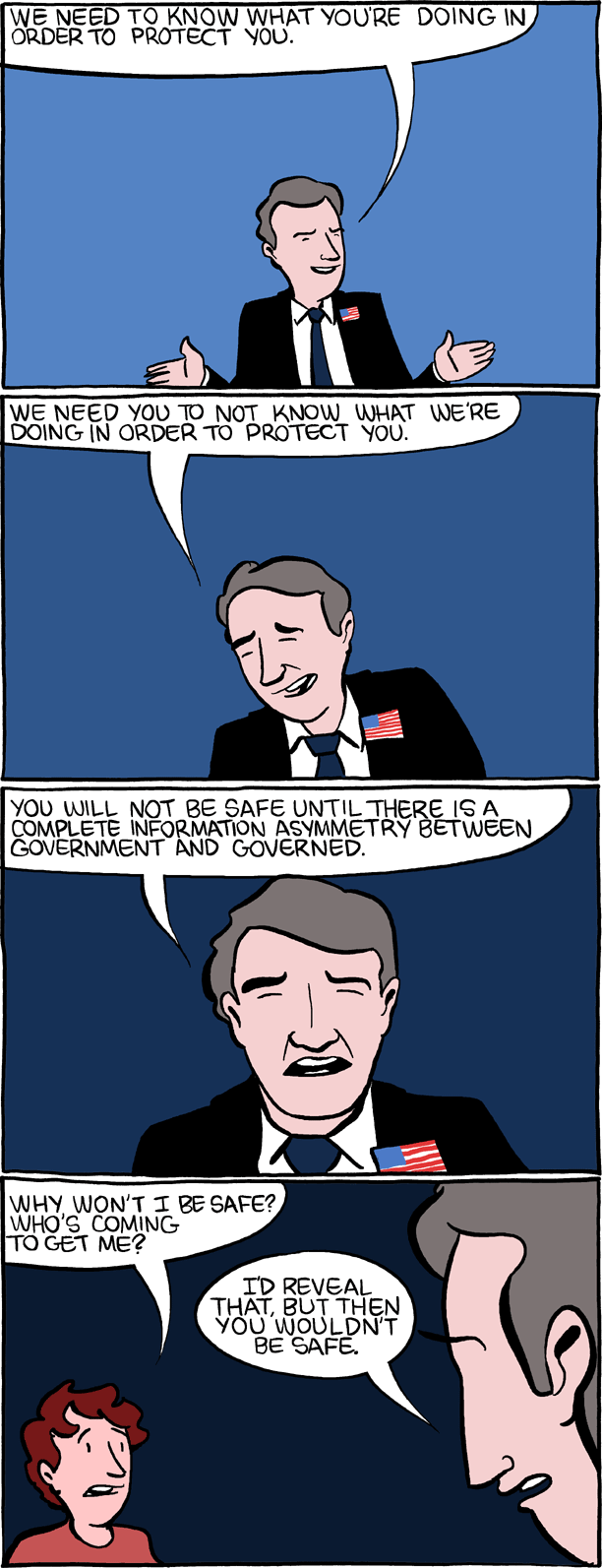
The FBI has a new proposal afoot to require communications companies doing business in the US to make their communications technologies “wiretap-ready”, to avoid the “going-dark problem”. From Charlie Savage at the New York Times, six hours ago:
The Obama administration, resolving years of internal debate, is on the verge of backing a Federal Bureau of Investigation plan for a sweeping overhaul of surveillance laws that would make it easier to wiretap people who communicate using the Internet rather than by traditional phone services, according to officials familiar with the deliberations. […]
Currently, such orders instruct recipients to provide technical assistance to law enforcement agencies, leaving wiggle room for companies to say they tried but could not make the technology work. Under the new proposal, providers could be ordered to comply, and judges could impose fines if they did not.
Under the proposal, officials said, for a company to be eligible for the strictest deadlines and fines — starting at $25,000 a day — it must first have been put on notice that it needed surveillance capabilities, triggering a 30-day period to consult with the government on any technical problems.
Lord forbid that private companies should offer services that can’t be wiretapped by the government. If the FBI finds itself unable to routinely spy on the communications of people not yet suspected of any crime, that’s a feature, not a bug, and is in fact what the Fourth Amendment requires.
In America, this manic need to collect every iota of data is “helping defeat the terrorists” and “protecting the homeland”. When other countries do it, though, it’s a whole different story. Read on!
Citizen! Were you under the misapprehension that the terrorist-sympathizing Supreme Court had ruled long ago that law enforcement had to get an actual warrant before accessing the content of your phone calls? Has that thought been keeping you up at night, because it allows people to express potentially un-American thoughts without the FBI being able to listen in and protect us? Well, fear no longer: your friendly neighborhood G-Man is on the case!
The NSA has just vigorously denied that their new Utah Data Center, intended for storing and processing intelligence data, will be used to spy on US citizens. The center will have a capacity of at least one yottabyte, and will provide employment for 100-200 people. With the most generous assumptions [200 employees, all employed only on reviewing the data, only one yottabyte of data, ten years to collect the yottabyte, 5GB per movie], each employee would be responsible on average for reviewing 4500 billion terabytes, or approximately 23 million years’ worth of Blu-ray quality movies, every year.
Must…keep…watching…my…country…needs…me
This astounding and continually increasing mismatch shows that we are well beyond the point where law enforcement is able to have a human review a manageable amount of the data in its possession potentially relating to terrorist threats. Computer processing power doubles every two years, but law enforcement employment is rising at a rate of about 7% every ten years, and nobody’s going to pay for it to double every two years instead. Purely machine-based review inevitably carries with it a far higher probability that important things will be missed, even if we were to suppose that the data was entirely accurate to begin with – which it certainly is not.
So why is anybody surprised that Tamerlan Tsarnaev, the elder of the Boston Marathon bombing suspects and one of around 750,000 people in the TIDE database, was not stopped at the border? That facial recognition software wasn’t able to flag him as a match for a suspect? That the fusion centers, intended to synthesize data into actionable “suspicious activity reports”, flag things too late for them to be of any use? That the Air Force is panicking a little at not having enough people to process the data provided by our drone fleet?
It’s in this context, then, that we should understand the calls for more surveillance after the Boston Marathon attacks for what they are. More cameras, more surveillance drones and more wiretapping, without many more humans to process the data, will make this problem worse, not better. These calls are being driven not by a realistic assessment that surveillance will help prevent the next attack, but by the internal incentives of the players in this market. Neither the drone manufacturers, nor law enforcement, nor elected officials, have an interest in being the ones to call a halt. So instead they’re promoting automation – automated drones, automated surveillance, and email scanning software techniques.
They are missing something very simple. We don’t need a terrorism database with 750,000 names on it. There are not 750,000 people out there who pose any sort of realistic threat to America. If the “terrorism watch list” were limited by law to a thousand records, then law enforcement would have to focus only on the thousand most serious threats. Given the real and likely manpower of the federal government, and the rarity of actual terrorism, that’s more than enough. If law enforcement used the power of the Fourth Amendment, instead of trying to find ways round it, it could focus more on the highest-probability threats.
Yes, they would miss stuff. That’s inevitable under both a tight and a loose system. But a tight system has the added advantages that it protects more people’s liberties, and costs a lot less.
UPDATE: With the help of a New Yorker fact-checker, the figure of “400 billion terabytes” above has been corrected to “500 billion terabytes”.
If you are in the BU area on Wednesday evening, come by to hear interesting speakers talking about privacy and security in the wake of the Boston Marathon attacks. Panelists will include Alex Marthews (that’s me!), James O’Keefe of the Massachusetts Pirate Party, and Gregg Housh. RSVP here.
A variety of excellent commentary over the weekend reflected on the civil liberties implications of the Boston Marathon attacks.
Over at Salon, Falguni Sheth and Robert Prasch used a thought experiment (What would have been different if the bombing had happened in 1977, before mass electronic surveillance?) to argue that the vast expenditure on the surveillance state has not had the net effect of either preventing terrorism or making apprehending terrorists more efficient; so why are we doing it, again?
At Popehat, Clark dissects the unprecedented, expensive and ineffectual lockdown of Boston and the western suburbs, and observes that it is only after the lockdown ended and citizens were back outside their doors that the suspect was located.
Last, there’s an excellent analysis and discussion of the Fourth Amendment issues raised by house-to-house searches for a fugitive by (once again) Orin Kerr at the Volokh Conspiracy. Enjoy!
The Boston Marathon attacks have brought to the surface some of the best and the worst in Massachusetts.
On the one side, many news sources reported responsibly and refused to speculate too quickly and without foundation about who the bombers were or why they might have done what they did. There seems at this stage good evidence on which to base the arrest of Dzhokhar Tsarnaev. Above all, he was taken into custody quickly and alive, and Bostonians will be able to learn more about the motivations behind the attacks.
This is the blog for the Campaign for Digital Fourth Amendment Rights, so unsurprisingly I’m going to focus on some of the Fourth Amendment issues arising out of the attacks; principally, the stop of the Saudi marathoner and the search of his apartment in Revere, and the constitutional issues raised when a householder refuses entry to law enforcement during house-to-house searches for a fugitive.
So we’re out from under the lockdown, and plenty happened while we were “requested” to stay inside. This has been an extraordinary week here in Massachusetts, and we’ll be dealing with the implications of it for some time to come.
Our congratulations go to the members of the public who provided crucial information that helped catch bombing suspect Dzhokhar Tsarnaev. Congratulations also to law enforcement, for proceeding cautiously in apprehending Tsarnaev, resulting in his being taken alive.
Coming up on warrantless.org:
– A two-part discussion of the Fourth Amendment relating to the Boston Marathon attacks, covering racialized “reasonable suspicion”, the case of the Saudi student, and the constitutionality of refusing entry to law enforcement conducting a house-to-house search.
– An update on Wednesday night’s upcoming BU-PAO panel discussion on privacy and security
Tom Brokaw, who in his long career has received every accolade a TV news journalist could receive, reacted on Monday to the Boston Marathon attack as follows:
Everyone has to understand tonight, however, beginning tomorrow morning early there’s going to be much tougher security considerations across the country. However exhausted we may be by them. We have to live with them and get along and go forward and not let them bring us to our knees.
Boston Police Commissioner Edward Davis’s less panicky reaction was much better:
We’ve done as much as we can. Our aim is not to turn this into a police state. We have to allow commerce to occur.
It’s easy to call for more security after what happened on Monday. It’s much harder to recognize that in truth, we were already doing all that we reasonably could to thwart attacks and more.
Today, by the finish line of the Boston Marathon, on the same city block as the church I go to, two bombs went off. I feel shocked and sad beyond belief.
Photo credit: KVLY.
My thoughts and prayers are with those who died or were hurt, with their families, and with all the people stranded in Boston on this cold night.
The former district attorney of Middlesex County, Gerry Leone, has taken to the airwaves to talk about how great the efforts have been before this attack to get a Joint Terrorism Task Force going, how well it has been working together, how smooth the state and federal collaboration has been, and how the appropriate response will be to increase random surveillance. Governor Patrick has also echoed his perspective, talking about the need for increased vigilance and random bag searches on the MBTA, which we have covered, and opposed, before.
It won’t surprise regular readers to know that my perspective on this is a little different and more skeptical. Even while massively and systematically abusing the Fourth Amendment, law enforcement wasn’t able to prevent this attack. The amount of data collected through warrantless electronic means by the centers Leone is talking about has been vast, and none of it, none of it, has thwarted a terrorist attack. Now, once again, they have failed us all.