Categories
Mission News

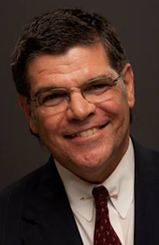
New Judiciary Senate Chair Will Brownsberger

brownsberger_2

The Joint Committee on the Judiciary handles most of the bills relating to privacy and surveillance in Massachusetts. Its most senior member is the Senate Chair. In a press release today, Senate President Therese Murray announced that Sen. Will Brownsberger (D-Belmont) would become the new Senate Chair of the Joint Committee on the Judiciary, replacing Sen. Katherine Clark, who was elected to Congress in Massachusetts’ Fifth District. She writes:

Senator Brownsberger is a deliberative and thoughtful leader in the Senate and has a strong work ethic. I am confident that he will continue to do great work in this new position.

Having seen Sen. Brownsberger’s work as my own senator, he is indeed thoughtful, deliberative and hard-working. He is genuinely concerned about transparency, and is very willing to communicate and discuss with constituents on a wide array of topics. Sen. Brownsberger ran for Congress as well in the Fifth District, and during the race his openness and willingness to see and consider both sides of many sensitive questions made it harder for him to appeal to a highly partisan Democratic primary electorate. In the Senate Chair position, his reflective disposition may be a significant advantage. The Senate Chair is often called upon to weigh carefully the competing claims of law enforcement and civil liberties advocates, and every indication is that he will weigh them with care.

We have documented already on this blog Sen. Brownsberger’s views on national surveillance issues like the Amash Amendment, the Electronic Communications Privacy Act, and the Surveillance State Repeal Act. At the state level, he has been supportive of warrant protections for email and digital data. On the wiretapping bill, he believes that the organized crime requirement is outdated and should be dropped, but also believes that the list of designated offenses suggested by the Attorney-General is too broad. On fusion centers, his skepticism of law enforcement claims is very welcome.

We don’t expect that Sen. Brownsberger will always and unambiguously vote the way we would like on the bills before the Judiciary Committee. However, we appreciate the Senator’s intellect and sense of professionalism. We hope that as Senate Chair, very often he will side with the Constitution, and opt to protect the residents of the Commonwealth from the growing pressure to subject them at every turn to unnecessary and intrusive surveillance.

Categories
Mission News

The Wall Begins To Crack: Fourth Amendment Challenge to Bulk Metadata Spying Program “Likely to Succeed on the Merits”

Ever since the 2005 revelations of Mark Klein (yes, that long ago) that the NSA was intercepting phone traffic on a mass basis, successive presidential administrations have employed every possible species of legal trickery to prevent a constitutional challenge to the program on the merits.

The key question is, Why? Surely, if either Bush or Obama believed their rhetoric that what they’re doing is Constitutional, they would welcome the courts’ review, which would surely result in a thumping endorsement of bulk metadata spying, probably based on the 1979 Supreme Court case Smith v. Maryland, which ruled the collection of much more limited metadata to be constitutional.

The actions of both administrations suggest otherwise. Their problem was always that the plain text of the Fourth Amendment didn’t seem to support their position. Shall we take a look at it again? I never get tired of it.

The right of the people to be secure in their persons, houses, papers, and effects, against unreasonable searches and seizures, shall not be violated, and no Warrant shall issue, except upon probable cause, but upon probable cause, supported by Oath or affirmation, and particularly describing the place to be searched, and the persons or things to be seized.

In order to be “reasonable”, a “search” must have a warrant, which is supported by “probable cause”, and which “particularly describes” the “place” to be searched.

So let’s say, then, just hypothetically, that you set up a massive phone data interception program without bothering with a warrant at all, and got Congress to retroactively immunize anyone participating in it from prosecution (hey there, W!), or that your response to the existence of this program when you got into office was to get a secret court to issue a secret ruling approving a warrant allowing the “seizure” of all phone metadata for all calls in the United States (howdy, BarackO!). How would a reasonable court interpret the requirements for probable cause, or for particularly describing the “persons or things” to be seized, for a program like that?

Categories
Mission News

MA-05: In their only debate, Clark and Addivinola spar over surveillance

Democratic nominee Katherine Clark and Republican nominee Frank Addivinola spent a substantial portion of their only televised debate sparring over privacy and surveillance. It has been great to see these issues playing such an important role in a Congressional campaign. However, there have been two less good outcomes, independent of who wins. First, it’s still not clear that either the Republican or the Democratic candidate will be skeptical enough about the claims of law enforcement and the intelligence agencies. Second, given that that’s so, it is unfortunate that the debate excluded the voices of the two independent candidates, Jim Aulenti and Jim Hall.

Here’s a transcript of the relevant section of the NECN debate, which is no longer available online. Our comments and fact-checking are in italics, and any significant commitments made by the candidates are in bold.

Categories
News

Who Watches The Watchmen? The US Government Clearly Does

Behold, the logo on the latest US spy satellite:

spysatellitelogo

I don’t even. What words are there for a surveillance state that thinks of itself as a gigantic octopus tentacling its way across the Earth, with the very creepy slogan “Nothing Is Beyond Our Reach”?

This is no longer state oppression. This is state oppression as performance art. Or, at the very least, state oppression as literary reference:

watchmen_ending

(h/t Techdirt)

Categories
News

MA-05: Independent candidates Valenti, Hall excluded from NECN debate

Jim Aulenti (Independent)
Jim Hall (Justice, Peace, Security)

It’s hard out there for third-party and independent candidates. In a more open political system, they would be able to compete on a level playing field with the Democratic and Republican nominees. In practice, there are high campaign finance and procedural hurdles before such candidates even get on the ballot, and even if they clear those high hurdles, they still find themselves treated as somehow less legitimate than the Democrats or Republicans. Now, Jim Braude‘s NECN show “Broadside” is hosting a candidates’ debate tomorrow night, and Braude has declared that only two candidates are welcome, saying:

The party candidates went through the primary process and were chosen by the electorate, and having more people would not do justice to the cause or those party candidates.

What, they couldn’t find an extra podium? I seem to recall that the 2012 Republican primary had almost as many candidates as Jesus had disciples, and they still figured it out. Would having four candidates break the cameras over at NECN?

Categories
Mission News

Bring Us Back Food, Or Be Food Yourself: The FBI and Ayyub Abdul-Alim

Ayyub-Abdul-Alim-Springfield-copy-1200x630

The Deep State requires terrorists as its food. Only by claiming, falsely, to thwart terrorist attacks before they happen, can the three-letter agencies justify their vast increases in budget, manpower and technology over the last ten years. The problem is that there’s just not enough terrorism to go around. On the amount of actual terrorism we have – which, excluding school shootings, has killed about thirty Americans in the last twelve years – you simply can’t justify NSA mass surveillance, 78 state-funded fusion centers, the massive and unnecessary DHS, or the ruinously expensive foreign adventures that have resulted in over 100,000 deaths and trillions of wasted dollars. If you can’t find enough terrorists, the obvious recourse – obvious, that is, if you have no decency and no actual love for justice – is to make your own terrorists. In Oregon and California and Ohio and New York and Massachusetts, the FBI has offered Muslims the same, terrible deal: Be our spy with your fellow Muslims, or we will ruin your life.

I have not come to this analysis lightly. It is a terrible observation to make about people who are supposed to protect us. But the bureaucratic imperative at work here is too powerful. Bring back a terrorist, and your career is made. Fail to find any, and people will start asking questions about why you need all those tax dollars to do your work.

Which brings us to the sad story of Amherst-born Springfield resident Ayyub Abdul-Alim – building manager, owner of the “Nature’s Garden” store, and the creator of “Connections Transportation”, which provided families with free commuter services to and from local prisons to visit their loved ones.

Categories
Mission News

Democratic process challenges use of DHS surveillance cameras

This is a guest post by Adam Weiss of the Bill of Rights Defense Committee.

camera-500x333From 2008 to 2010, Boston and eight surrounding cities and towns installed surveillance cameras provided by a grant through the Department of Homeland Security’s (DHS) Urban Areas Security Initiative. DHS’ website describes the cameras as part of a system that has “nine, independent and interoperable nodes tied together through a central hub and is made up of over 100 cameras.” The cameras were justified for the protection of “critical infrastructure” from terrorist attack, but their use has faced scrutiny from citizens concerned about threats to civil liberties. In Brookline and Cambridge, two municipalities covered by the grant, residents are using local governments to attempt to ban surveillance cameras.

Four members of Brookline’s Town Meeting, the two hundred and forty-five member legislature of the town government, are co-sponsoring a resolution calling on Brookline’s Board of Selectmen to remove all DHS-provided cameras. The resolution is expected to be voted on by Thursday, November 21. While the Town Meeting cannot set binding policy on the use of surveillance cameras, which is left to the Board of Selectmen, its role as the voice for public opinion can have major impact. In 2009, the Town Meeting passed a similar resolution, which led to a compromise with the Brookline Police Department that the cameras would only operate from 10 pm to 6 am. However, the Brookline police are seeking to implement a policy of 24-hour surveillance following the Boston Marathon bombing, which now has prompted four Town Meeting members to co-sponsor another resolution.

The proposed resolution states that mass surveillance is not appropriate for a free society, and further declares:

“Permanent surveillance cameras are another step in the wrong direction toward radically changing our sense of being a free society…While public places may not, in a technical legal sense, be places where we have an ‘expectation of privacy,’ the right to be let alone and not identified or tracked by the police is a fundamental aspect of a free society.”

One of those co-sponsors, Clint Richmond, expressed concern about the chilling effect surveillance cameras can have on the First Amendment rights to freedom of speech and assembly, specifically citing that one camera is located at a popular site in Brookline for political activity. Richmond stated his belief that when people know they are under surveillance, their “behavior becomes inhibitive, impairing the right to free speech.”

Kade Crockford, director of the Technology for Liberty program at the American Civil Liberties Union of Massachusetts (ACLUM), has worked with Brookline PAX, a progressive organization of Brookline residents, providing community organizing support against the DHS cameras. Crockford conveyed her belief that the mass use of surveillance cameras foregoes more effective alternatives to reducing crime, since they do not deter crime and when perpetrators are caught after the fact, the vast majority of cases are for minor crimes, such as petty theft. She said it is thus “misleading” to claim that cameras can be effective at stopping terrorism. Another fear Crockford discussed was the “centralization of surveillance” provided by the cameras, since they are part of a larger network throughout Greater Boston, meaning they could potentially allow a person to be followed over a large geographical area.

Residents of Cambridge have thus far achieved the most success in limiting camera use of the nine Greater Boston municipalities that have them. As with Brookline, the Cambridge Police Department (CPD) also supports turning the cameras on twenty-four hours a day. However, in response to pressure from the Cambridge City Council, they have not been turned on at any point, despite being installed in 2009. The CPD recently published a draft policy for the use of the cameras, which was discussed at a public hearing on September 26, 2013. The ACLUM provided a statement at this meeting, which addressed the larger context of surveillance camera use, stating

“After 9/11, the creation of the Department of Homeland Security catalyzed a transfer of funds, technologies, strategies, and tactics from the military and intelligence worlds down to the state and local levels. These transfers are part of a larger, dangerous trend of powerful and largely unaccountable federal agencies conscripting local police to act as eyes and ears for the national surveillance state.”

The City Council is waiting for the CPD to release its final draft of a policy before voting again on the issue, which is likely to happen in early 2015. Melissa Gonzalez, a member of Cambridge’s Human Rights Commission, the town government agency responsible for investigating unlawful discrimination, said there was great concern that cameras were placed in neighborhoods that could be profiling people of specific ethnicities and religion. She also expressed concern that there was insufficient accountability for camera use if activated, because the CPD cites only its own internal review procedures to ensure appropriate usage.

The fate of the cameras in both municipalities remains uncertain, as the impact of the Boston Marathon bombing has affected many people’s attitudes towards surveillance cameras. Richmond says he expects the vote in Brookline this week to be very close. In Cambridge, it is unclear how the City Council will react to a final CPD policy on camera use. Nonetheless, both municipalities exemplify how the democratic process can be used to limit the growing surveillance state.

Categories
Mission News

Thou Shalt Not Connect The Dots: FBI Flat-Out Refusing All FOIA Requests From MIT PhD Candidate, Because He Might Learn Too Much

eco-enigma

Item #2 on the NSA’s Official Talking Points to Justify Mass Surveillance (see p. 3) is “The NSA And Its Partners Must Make Sure We Connect The Dots So That The Nation Is Never Attacked Again Like On 9/11.” The government is fighting furiously against any attempt to restrict, say, its collection of metadata on all US telephone calls, because they argue that only collecting everything enables them to detect patterns and conduct analyses that would otherwise be impossible.

But what happens if instead of the government, the public starts using the same tools on the government? What happens when the burning eye of the surveillance state is turned back on itself?

Mother Jones reports that that’s what MIT PhD candidate Ryan Shapiro is doing. He has long been active in the field of animal rights, and became interested in the FBI’s characterization of “the eco-terrorism animal rights movement” as “the number one domestic terrorism threat” that we face. He has figured out a way of getting responses to FOIA that is so effective that the FBI is going to court to stop him.

Categories
Mission News

Sauce for the Gander: Boston Police Officers Apparently Don’t Like Being “Followed All Over The Place”

sauce_for_gander

From the ACLU of Massachusetts:

Boston Police Department bosses want to install GPS monitoring devices in every patrol car, to enable dispatch to more efficiently process 911 calls. But police officers and their union are outraged, saying that the ubiquitous tracking is too invasive of their personal privacy. Tracking the location of officers as they go about their days would reveal incredibly detailed information about their lives, the officers say.

It must be just awful to go about your daily life looking over your shoulder, conscious that your every movement and activity is being recorded and could be used against you. Oh, wait. That’s what the entire American public is already dealing with, in this age of mass electronic surveillance. But the way the police union is hissing’n’flapping about it, it’s almost as if there was something wrong with that. Don’t they know that you have nothing to fear, if you have nothing to hide?

The ACLU’s tack is that if the police don’t like the feeling of being followed, they shouldn’t be pushing for technologies like mass tracking of license plates or cellphone locations. That’s fair enough, but there’s a larger point here also.

Police officers are public employees, and they would be monitored during, and only during, the performance of their duties as public officials employees. We require elected officials to disclose their votes publicly, and require secrecy for private individuals at the ballot box, even though that’s inconsistent, because public disclosure of how public business is conducted is vital to maintain democratic accountability. In the same way, close monitoring of law enforcement is vital, to ensure that police don’t abuse the vast and special powers society gives them. When you put cameras on cops, complaints about police misbehavior and brutality drop like a stone. We have the right – affirmed by the federal courts in the First Circuit and across America – to record the police in the commission of their duties. The Fourth Amendment constrains the actions of the government, not the actions of members of the general public.

The Boston police may not like it – last week’s PINAC case shows that they’re willing even to threaten people with felonies to avoid public embarrassment over misconduct – but they are not entitled to a high level of privacy protection in their capacity as police officers. That distinction matters. Doxxing police officers’ personal names and phone numbers and addresses is not cool. But recording them, having them record themselves, and encouraging people to call their office numbers and hold them accountable to the public, is vitally important in order to preserve freedom for the rest of us.

Categories
News

Justice for Army Spc. Denis Reynoso

We like to think that we’re safe in our homes, and that if we need the police, we can call on them to help protect us. That’s what we tell our children – I have two – and I’d like to think it was more consistently the truth than it is.

Today’s story comes from Lynn, MA, which in September saw an Army reservist shot to death in his home by police in front of his five-year-old son.


Army Spc. Denis Reynoso

Police were called after Spc. Reynoso yelled at a man, who then drove away. Two police officers arrived at the Reynoso home on Newcastle Street in the King’s Lynne housing complex, and they appear to have entered the home without either a warrant or the permission of the residents, which would clearly violate the Fourth Amendment. The police version of events is that during the ensuing argument, Spc. Reynoso lunged for one of the police officers’ weapon, and fearing for their lives, the police fatally shot him. The family point out that there is no way to confirm that Spc. Reynoso did lunge for an officer’s gun, and no public information as to why he might do so; that he was unarmed, that they shot him anyway, and that they then searched the house for any drugs or contraband that would provide justification for their actions, without a warrant and without finding anything.

The excuse used by the police – that he “lunged” for the gun – is inherently unprovable. It’s such a hoary old chestnut when it comes to defending the indefensible that it has been immortalized in song. Perhaps that’s why they thought of it.